The Man Who Taught Italy to Fly
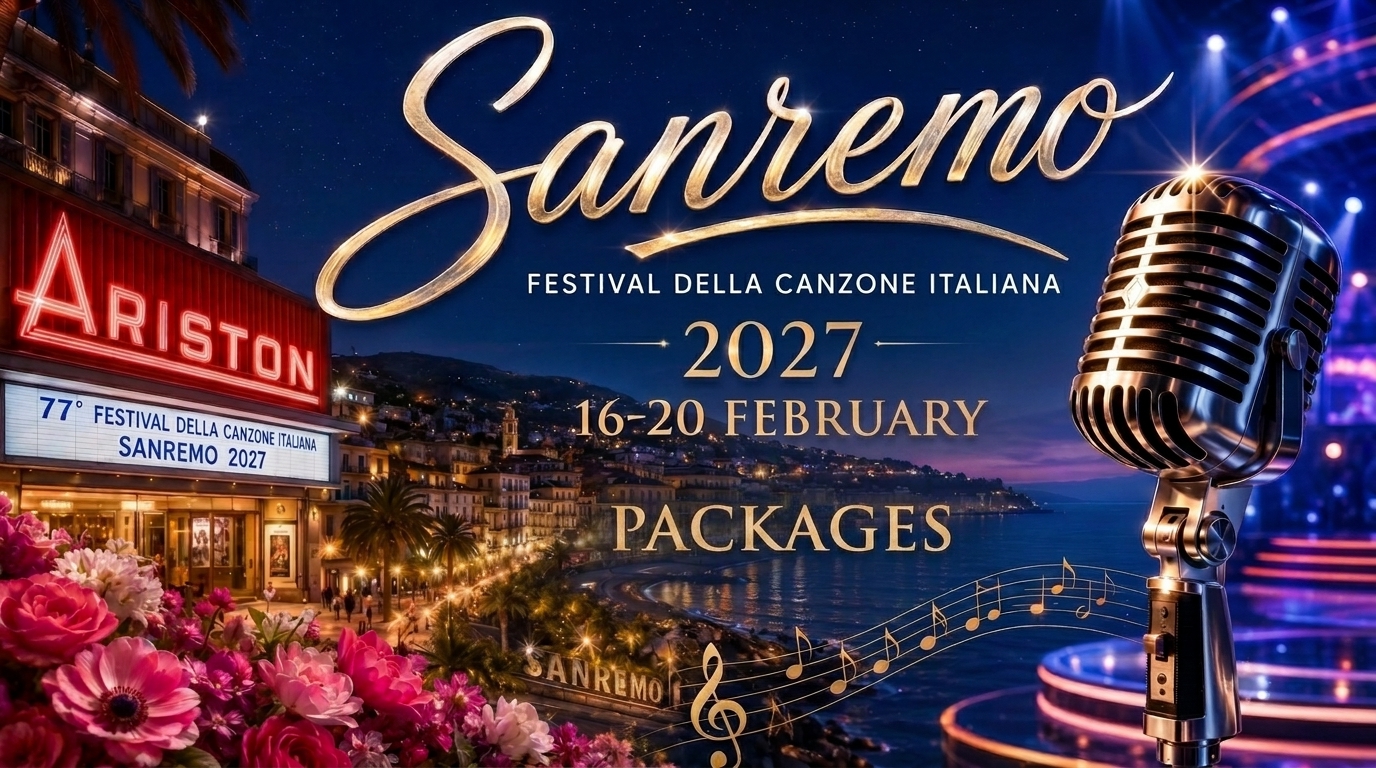
There is an evening in January 1958, at the Ariston in Sanremo, that belongs forever to the history of Italian music. A singer-songwriter from Puglia takes the stage with wide-open eyes and arms raised toward the sky, and begins to sing something no one has heard before: a song that starts like a dream and ends like a flight. When Domenico Modugno sings “Volare, oh oh, cantare, oh oh oh oh,” the Sanremo Festival ceases to be a competition and becomes an eternal moment.
Modugno was born on January 9, 1928, in Polignano a Mare, in Puglia: a white stone village clinging to the cliffs above the Adriatic Sea, where the wind and the blue of the sea enter everywhere. In that Puglian light, perhaps, he learned to lift his gaze upward. The son of a carabinieri marshal, as a child he moved with his family to San Pietro Vernotico; as a teenager he dreamed of acting and singing, until in Rome he found his path between the Centro Sperimentale di Cinematografia and the stages of theaters.
Then came Sanremo 1958. “Nel blu dipinto di blu” — written with Franco Migliacci on a summer night, inspired by a dream and by Chagall’s paintings hanging on the wall of a Roman apartment — won the Festival and revolutionized the global music industry. The song sold over 22 million copies, won two Grammy Awards (Record of the Year and Song of the Year), represented Italy at the Eurovision Song Contest, and climbed the American charts. For the first time, an Italian singer entered the hearts of the entire world.
But Modugno was not a passing phenomenon: he was a complete artist. He returned to win Sanremo in 1959 with “Piove (Ciao ciao bambina),” in 1962 with “Addio… addio…” and in 1966 with “Dio, come ti amo.” Four victories, four different eras, one unmistakable voice: husky, warm, capable of containing both the melancholy of the South and the joy of living.
Life did not spare him: a stroke in 1984 left him half-paralyzed. With tenacity he returned to perform, returned to Polignano in 1993 welcomed by 68,000 people like a prodigal son. He died on August 6, 1994, in Lampedusa, embraced by the sea he had always loved.
Today a ten-foot bronze statue immortalizes him in Polignano a Mare, arms open toward the sea, in eternal flight. He is the first singer-songwriter in Italian history: not only someone who wrote the songs he sang, but someone who lived them, embodied them, launched them into the blue.
In Brief
Born: January 9, 1928, Polignano a Mare (BA)
Died: August 6, 1994, Lampedusa
Sanremo Victories: 1958 · 1959 · 1962 · 1966
Signature Song: Nel blu dipinto di blu (Volare)
Awards: 2 Grammy Awards (1959): Record of the Year and Song of the Year
Trivia: First singer-songwriter in Italian music history